

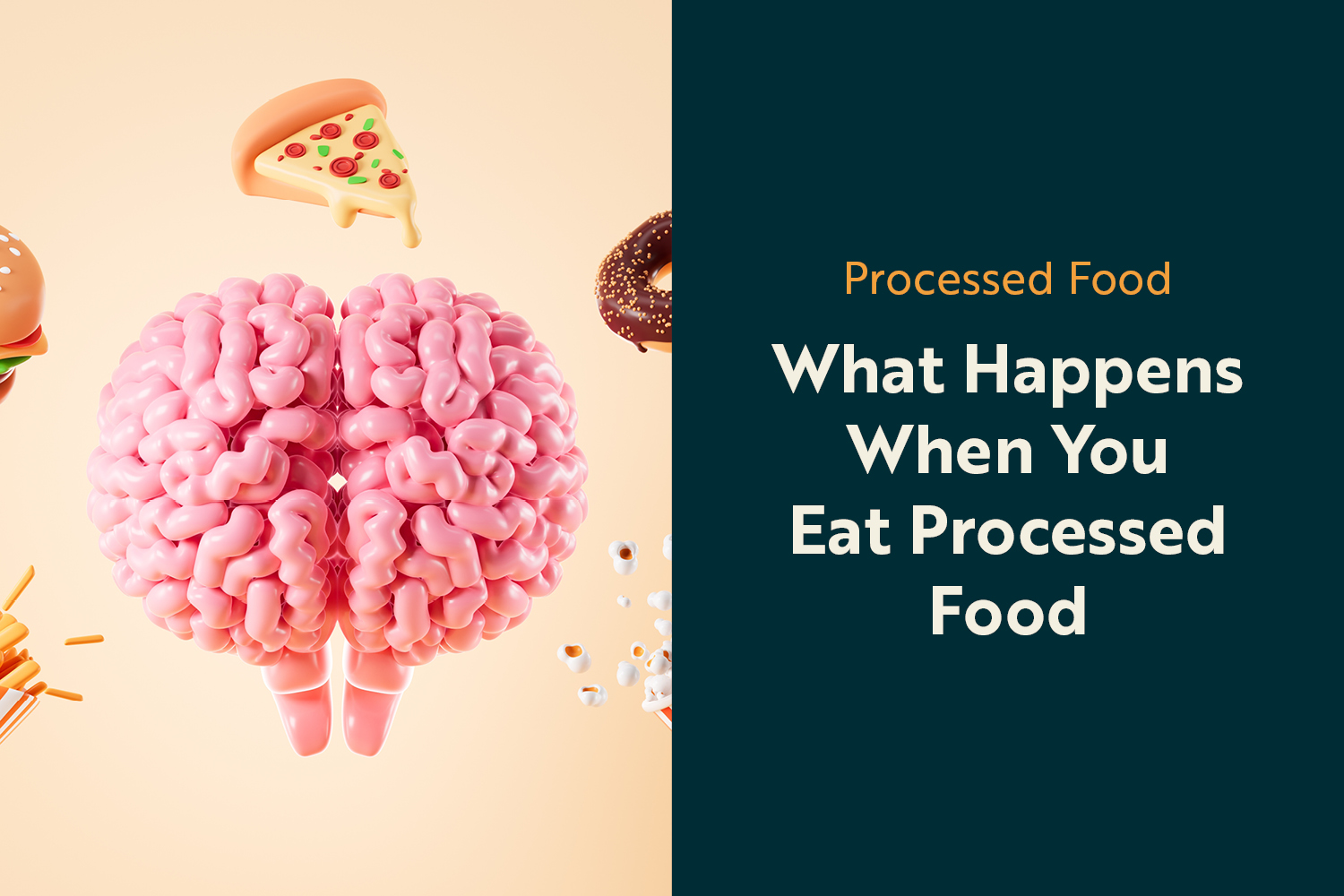
Imagine replacing most of your regular meals with products that come from a packet. That for one month, 80% of what you eat will be ultra-processed.
At first, it feels convenient. Everything is quick, easy, and tasty. But within days, your body and mind begin to respond in unexpected ways.
The changes start almost immediately. Meals that should feel satisfying somehow don’t.
You might finish eating and still feel an odd, hollow hunger. It’s as if your body recognises that something important is missing, even when your stomach is full.
Soon, cravings become stronger. The more you eat, the more you want.
Mood also begins to fluctuate. You may feel irritable, tired, or unfocused. It’s a kind of restlessness that food doesn’t seem to fix.
Inside the body, hormones are struggling to adapt. Blood sugar rises quickly after eating ultra-processed food, and the hormone insulin rushes in to lower it.
Over time, this constant surge confuses the system. Leptin, the hormone that tells your brain you are full, begins to lose its signal. You keep eating, but the message to stop no longer arrives.
Many people believe that as long as calorie intake stays the same, weight should remain stable. In reality, not all calories act alike.
Ultra-processed foods are designed to be soft, fast, and easy to eat. They move through the mouth quickly, giving the body little time to register what’s happening. Before you know it, you’ve eaten far more than you intended.
The impact is not just physical. The brain also starts to feel the difference.
People often report what’s known as brain fog: a dull, cloudy feeling that makes concentration difficult. Sleep may become disrupted, leaving you more tired and more likely to reach for quick energy in the form of sugary or fatty snacks.
The body’s confusion and the brain’s craving work together. One drives the other.
You eat because you’re tired, and you’re tired because of what you eat. It’s an easy cycle to fall into, but a difficult one to break.
Living on ultra-processed food can change how you feel about eating itself. Meals lose their rhythm. There’s less enjoyment and more impulse.
What was once a natural, comforting part of daily life becomes mechanical. The connection between hunger, satisfaction, and pleasure starts to fade.
Even a short period of eating this way can be revealing. It shows how sensitive the human body is to what it’s fed.
You may notice changes in energy, focus, sleep, and mood within days. These shifts are not about willpower or weakness. They are a biological response to food that has been engineered for consumption rather than nourishment.
The encouraging news is that recovery can be quick. When you return to simple, whole foods, your body begins to restore its balance.
Hunger signals start to make sense again. Cravings fade. Energy returns. It’s a reminder that your body knows exactly how to look after itself once it’s given the right fuel.
The 80% experiment highlights an important truth. The food we eat does more than fill us; it shapes our hormones, thoughts, and emotions.
When most of what we eat is processed, the body struggles to find its rhythm. But when we return to real food, we rediscover what eating is meant to feel like: nourishing, steady, and satisfying.

We are based in three locations and share buildings with Prestige Dental Care.
