

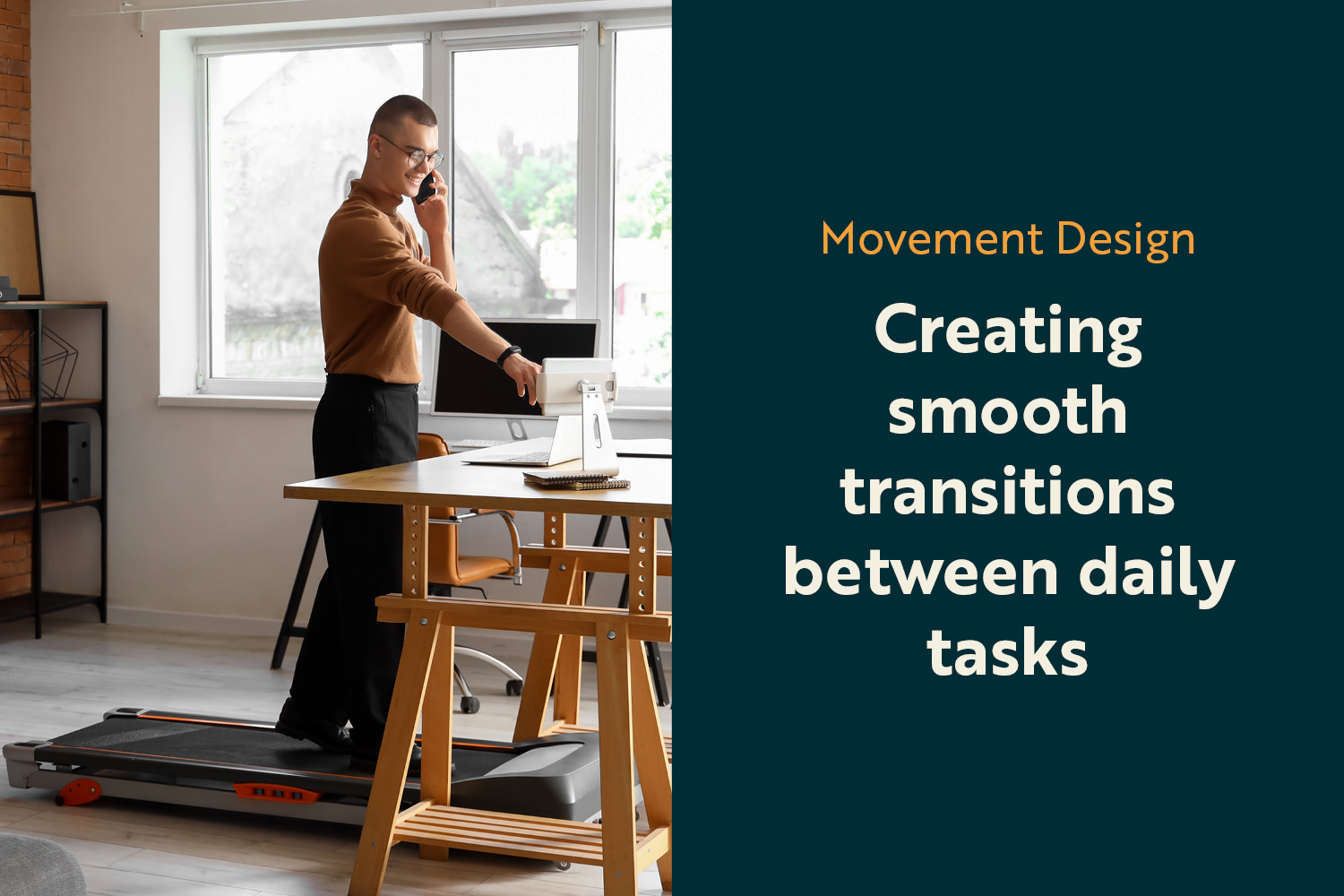
A busy day often moves in quick jumps rather than a smooth sequence.
You go from sitting to standing, from stillness to action, or from one task straight into the next without much transition time. Those sharp shifts can leave your body feeling more taxed than the actual workload of the day.
Interestingly, it’s often the way you move between the shifts that creates this sense of heaviness rather than the shifts themselves.
Those in‑between moments ask a lot of your body, especially the hinges that help you shift from one position to the next. When those hinges are stiff or slow to respond, every transition feels a little sharper.
Chiropractic care supports this by improving how well those hinges move, so the bridges between your tasks feel smoother and less demanding.
Your body works a lot like a vehicle shifting through gears. If you try to jump from a standstill straight into high speed, the system grinds. That jolt is where the wear happens, not the cruising.
It’s the same in your body. Most physical strain doesn’t happen while you’re sitting or while you’re walking. It happens in the rough gear change between the two.
When those gear changes are smoother, your body doesn’t have to brace, catch, or correct as often. The movement settles into steadier patterns because the shift leading into it isn’t as abrupt. You move from stillness to motion without that familiar sense of friction.
These moments between activities are where your body has to reorganise quickly. Standing up after sitting for a long time or twisting to grab something are the points where the body absorbs sudden spikes of effort. These are the gaps in your architecture that need a bridge.
Simple things, like softening the sequence with a small pause or a gentle weight shift before you move on, give your body a moment to organise itself. They’re tiny adjustments that act as bridges and carry you from one task to the next. They reduce the sudden spikes of effort that happen when you ask a cold or still body to perform a quick action.
Your body also moves best when it isn’t locked into one position for too long. Instead of trying to achieve rigid scheduling or perfect posture, let your body cycle through different positions often enough that no single one becomes a bottleneck.
Small variations in pace and posture like this give you more available movement options. And when you give your body these frequent, small transitions, you stop tension from parking in one spot. You’re essentially keeping the engine idling so that when you need to move, the shift’s smooth rather than a jolt.
When your movements link together more smoothly, your nervous system doesn’t have to scramble to keep up. Instead of reacting to each shift as a surprise, it can anticipate what’s coming next. That sense of continuity is what makes movement feel more connected. You’re carrying a bit of momentum from one moment into the next.
Chiropractic care supports this by improving how well your spine coordinates those transitions. When the spine contributes clean, coordinated movement, the signals that guide your timing and sequencing become clearer. That clarity helps your body organise the “gear change” moments so they feel less abrupt and more like a natural slide into the next phase of movement.
With cleaner transitions, your system stays with you rather than bracing to catch up. You’re simply moving through your day in a way that feels more fluid and far less effortful.
When your body links one moment to the next with cleaner transitions, those everyday shifts feel less like a jolt and more like a natural change of gear. So, although your schedule stays the same, the way you move through it changes.
The day stops feeling like a series of stops and starts and becomes a lot more continuous.

We are based in three locations and share buildings with Prestige Dental Care.
