

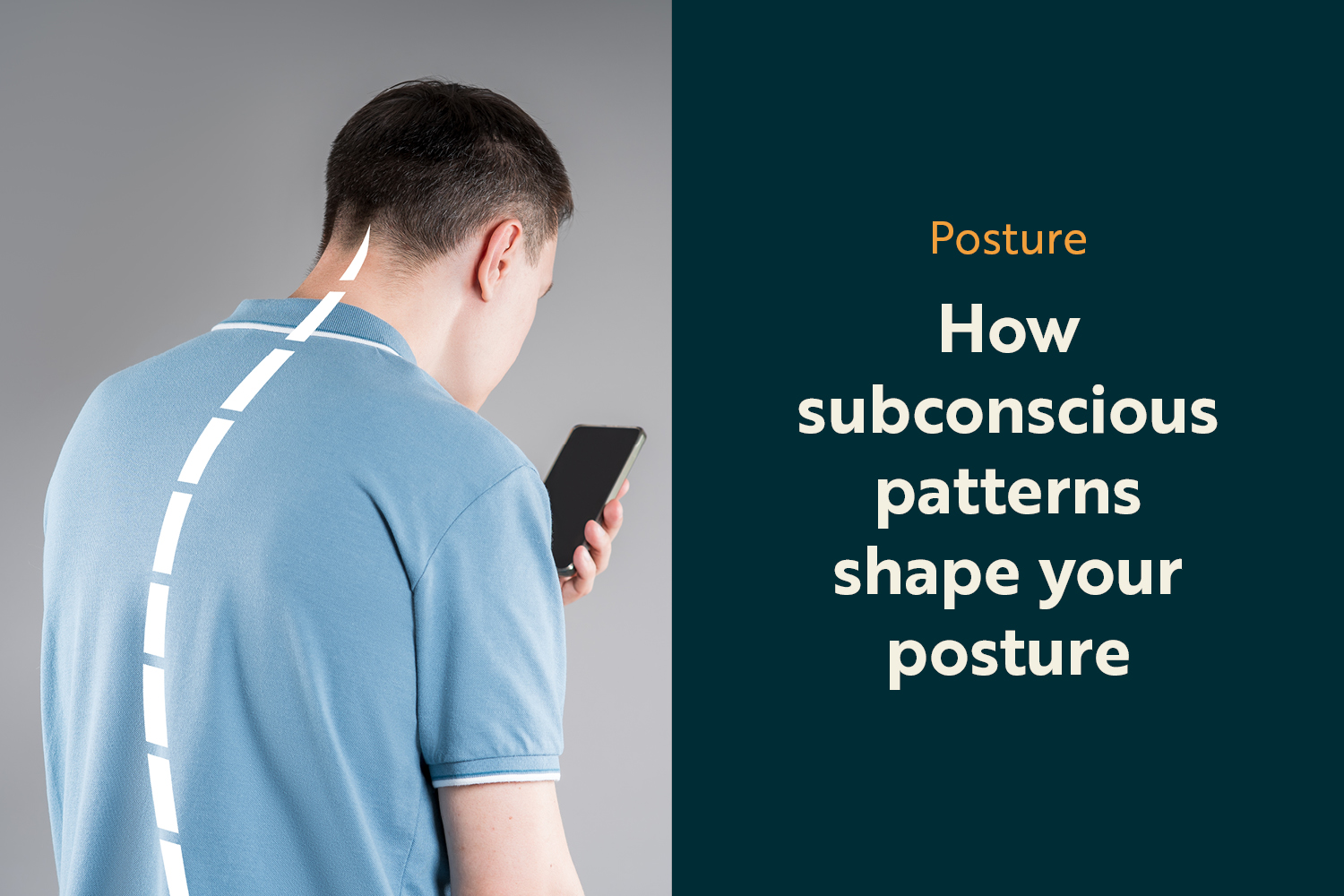
Some habitual postures return so quickly you barely notice the moment they reappear. You straighten up, feel balanced for a while, and then find yourself drifting back into the same familiar shape.
It isn’t a failure of awareness though, just your body reverting to what it knows best and feels most familiar with. “Awareness” in this context simply means the part of you that notices what your body is doing, not the part that controls it.
Chiropractic care often highlights how persistent these physical memories can be. After an adjustment, your body might feel different, but those rehearsed patterns often try to resurface as soon as your attention shifts.
Your body learns posture the same way it learns any well‑practised skill. Think about driving a car. At first, every action is deliberate; checking mirrors, easing off the brake, finding the right pressure on the accelerator.
With repetition, the sequence becomes second nature. You don’t think your way through it anymore. You just do it.
Posture works the same way. The shapes you repeat most often become your default settings.
Most postural habits don’t start out as problems. They’re usually practical responses to your environment. Perhaps you lean forward to see better, shift to relieve pressure, or brace during long periods of sitting.
The challenge is that your body doesn’t automatically update the pattern when the original reason disappears. It keeps using the same strategy because it’s familiar. Yesterday’s solution becomes today’s default, even when the context has changed.
Once a pattern is well‑established, it influences how you move without needing your attention. Certain areas may feel less available, or some movements might feel awkward, but the reason isn’t always obvious. Your body is simply following the routes it’s travelled the most.
You don’t, however, need force to change these patterns. What you need is a way to interrupt the automatic sequence long enough for your body to explore something different.
Chiropractic care introduces a new physical conversation to your system. It creates a pause in the automatic loop, an interruption that makes your system hesitate before defaulting to the same old routes.
In that moment, your body can sense itself differently and notice the patterns it usually runs on autopilot. It doesn’t necessarily “fix” your posture, however, because your body tends to return to the shapes it remembers most deeply. It follows the route that feels most familiar to it.
Posture isn’t a test of discipline. It’s a reflection of what your body has practised the most. When chiropractic care is paired with small, consistent changes in how you move, your internal settings begin to shift.
New positions stop feeling foreign. Old ones lose their grip. Your body starts to recognise a broader range of options, and over time, the shapes that once felt like effort become the ones that feel most like you.

We are based in three locations and share buildings with Prestige Dental Care.
